

Hey there! As a supplier of Twin Screw Elements, I've gotten tons of questions about the difference between single - screw and twin - screw elements. So, I thought I'd break it down for you in this blog.
Let's start with the basics. Single - screw elements are, well, just what they sound like – a single screw that rotates inside a barrel. They've been around for ages and are used in a whole bunch of industries. On the flip side, twin - screw elements have two screws that work together. Each has its own perks and drawbacks, and understanding these can really help you pick the right one for your needs.
Design and Structure
First up, let's talk about the design. Single - screw elements are pretty straightforward. You've got one screw with a helical flight that winds around a central shaft. It's simple, and that's part of its charm. The design is easy to understand and maintain. You can visualize it as a big corkscrew spinning inside a tube. The material you're processing gets pushed along the screw's flight as it rotates, and that's how it moves through the barrel.
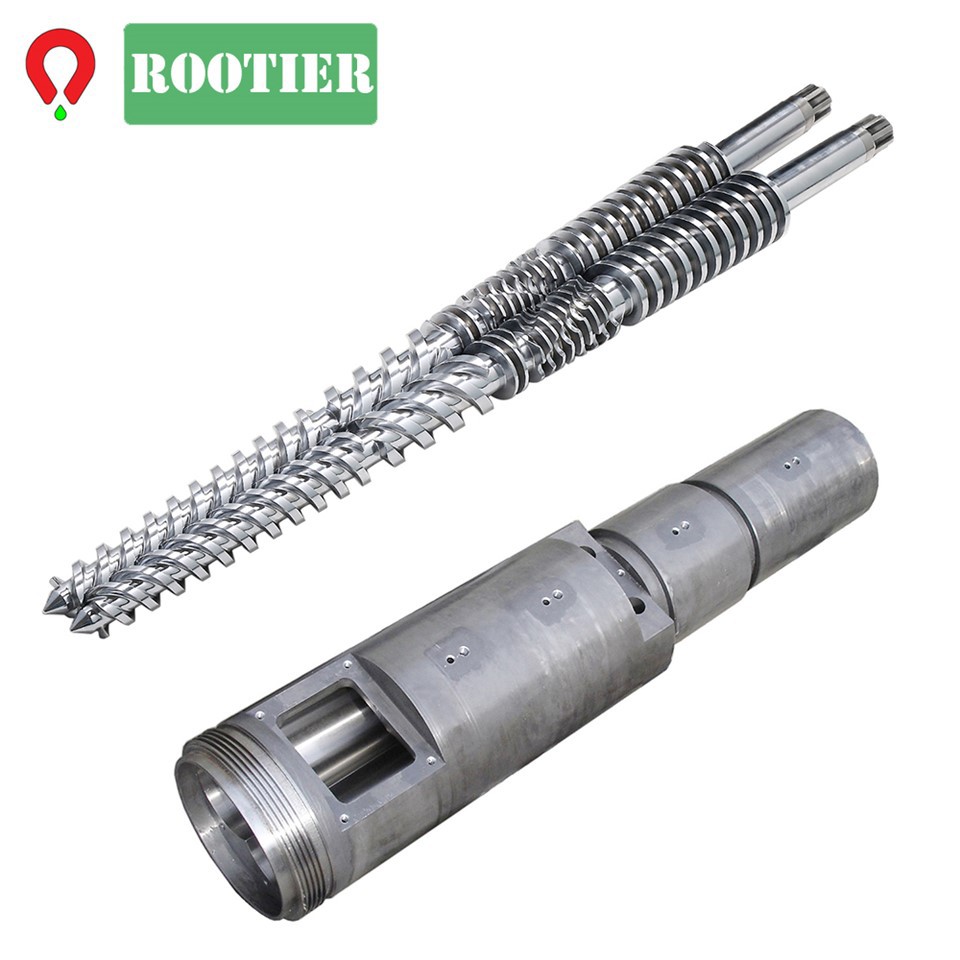
Twin - screw elements, on the other hand, are a bit more complex. There are two screws placed side by side in a barrel. These screws can either rotate in the same direction (co - rotating) or in opposite directions (counter - rotating). The co - rotating twin - screw setup is more common because it offers better self - wiping action. That means the screws clean each other as they rotate, reducing the chances of material buildup. The counter - rotating setup, while less common, has its own advantages, like better mixing in some cases.
Mixing Capabilities
One of the biggest differences between single - screw and twin - screw elements is their mixing capabilities. Single - screw elements are decent at conveying materials, but when it comes to mixing, they're not the best. The mixing in a single - screw setup mainly happens through shear forces as the material rubs against the barrel and the screw flight. However, this type of mixing is limited, especially when you need to blend different materials evenly.
Twin - screw elements shine in the mixing department. The interaction between the two screws creates a complex flow pattern that results in excellent distributive and dispersive mixing. Distributive mixing is all about spreading the different components of a mixture evenly throughout the volume, while dispersive mixing breaks down agglomerates and distributes them uniformly. Whether you're working with polymers, masterbatches, or other materials, twin - screw elements can achieve a much higher level of mixing quality. If you're interested in specific twin - screw components for masterbatch mixing, check out Screw Barrel Element for Masterbatch.
Processing Speed and Throughput
When it comes to processing speed and throughput, twin - screw elements often have the upper hand. Since there are two screws working together, they can move more material through the barrel in a shorter amount of time. This makes them ideal for high - volume production. The co - rotating twin - screw design, in particular, allows for efficient material transport and can handle a wide range of viscosities.
Single - screw elements, while they can be used for high - throughput applications, are generally limited in comparison. The single screw has a fixed capacity for moving material, and increasing the throughput often requires increasing the screw speed. But there's a limit to how fast you can spin the screw before you start to encounter problems like material degradation or uneven processing.
Shear Control
Shear is an important factor in many processing applications. Shear forces can break down polymers, disperse additives, and affect the final properties of the processed material. Single - screw elements tend to generate a relatively high and uniform shear rate. This can be a problem if you're working with materials that are sensitive to high shear, as it can lead to degradation or changes in the material's properties.
Twin - screw elements offer better shear control. You can adjust the screw configuration, speed, and other parameters to achieve the desired shear level. For example, you can use different types of screw elements in the twin - screw setup to create zones of high or low shear as needed. This flexibility makes twin - screw elements suitable for a wider range of materials and processing requirements. If you want to know more about the conveying part of twin - screw elements, check out Screw Element Conveying Part.
Applications
Single - screw elements are commonly used in applications where simple conveying and basic mixing are sufficient. They're often found in extrusion processes for products like pipes, films, and sheets. They're also used in some injection molding machines, especially for smaller parts or when the material doesn't require extensive mixing.
Twin - screw elements, with their superior mixing and processing capabilities, are used in more demanding applications. They're widely used in the production of engineering plastics, masterbatches, and pharmaceuticals. The ability to precisely control the mixing and shear makes them ideal for these industries, where the quality of the final product is crucial. If you're involved in projects that need a twin - conical screw setup, take a look at Twin Conical Screw Cylidner.
Cost Considerations
Cost is always a factor when choosing between single - screw and twin - screw elements. Single - screw elements are generally less expensive to purchase and maintain. Their simple design means there are fewer parts to replace, and the manufacturing process is less complex. This makes them a cost - effective option for small - scale operations or applications where the performance requirements are not too high.
Twin - screw elements, on the other hand, are more expensive upfront. The complex design and the need for precision manufacturing result in a higher cost. However, when you consider the long - term benefits, such as better product quality, higher throughput, and more flexibility, the investment can pay off. In many cases, the improved efficiency and product quality can lead to cost savings in other areas of the production process.
Conclusion
So, there you have it – the main differences between single - screw and twin - screw elements. Each has its own strengths and weaknesses, and the choice between the two depends on your specific processing requirements. If you need simple conveying and don't require much mixing, a single - screw element might be the way to go. But if you're looking for high - quality mixing, better shear control, and higher throughput, twin - screw elements are the clear winner.

As a supplier of Twin Screw Elements, I'm here to help you make the right choice for your business. Whether you have questions about the different types of twin - screw elements, need advice on screw configuration, or want to discuss your specific application, I'm just a message away. Let's have a chat and see how we can work together to meet your processing needs.
References
- Rauwendaal, C. (2014). Polymer Extrusion. Hanser Publishers.
- Throne, J. L. (1996). Thermoplastic Polymer Rheology and Processing. Marcel Dekker.


